


Why Soft Skill Training is Essential for HR
Soft skills training has become a key success factor in HR, learning & development, and talent programs. While technical knowledge can often be learned quickly, skills such as communication, empathy, conflict resolution, teamwork, resilience, and leadership are now decisive factors in how successfully employees perform in their day-to-day work. HR departments in particular are under increasing pressure to create learning opportunities that are both modern and effective, while also strengthening the corporate culture in the long term. Soft skills promote collaboration, reduce conflicts, and improve internal and external communication. These factors contribute to strategic employee retention and employer branding.
How Immersive Soft Skill training Sessions Transforms HR Processes
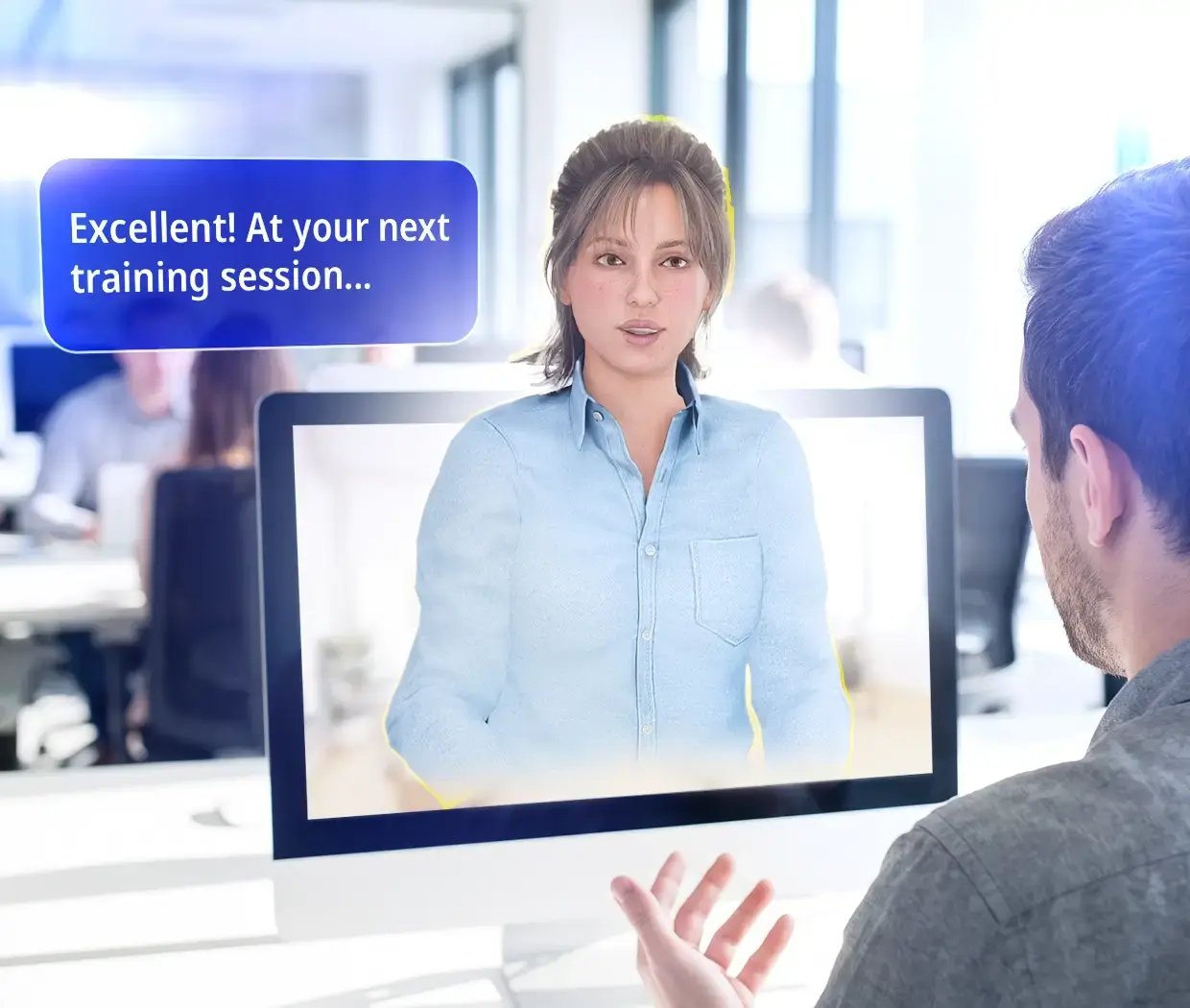
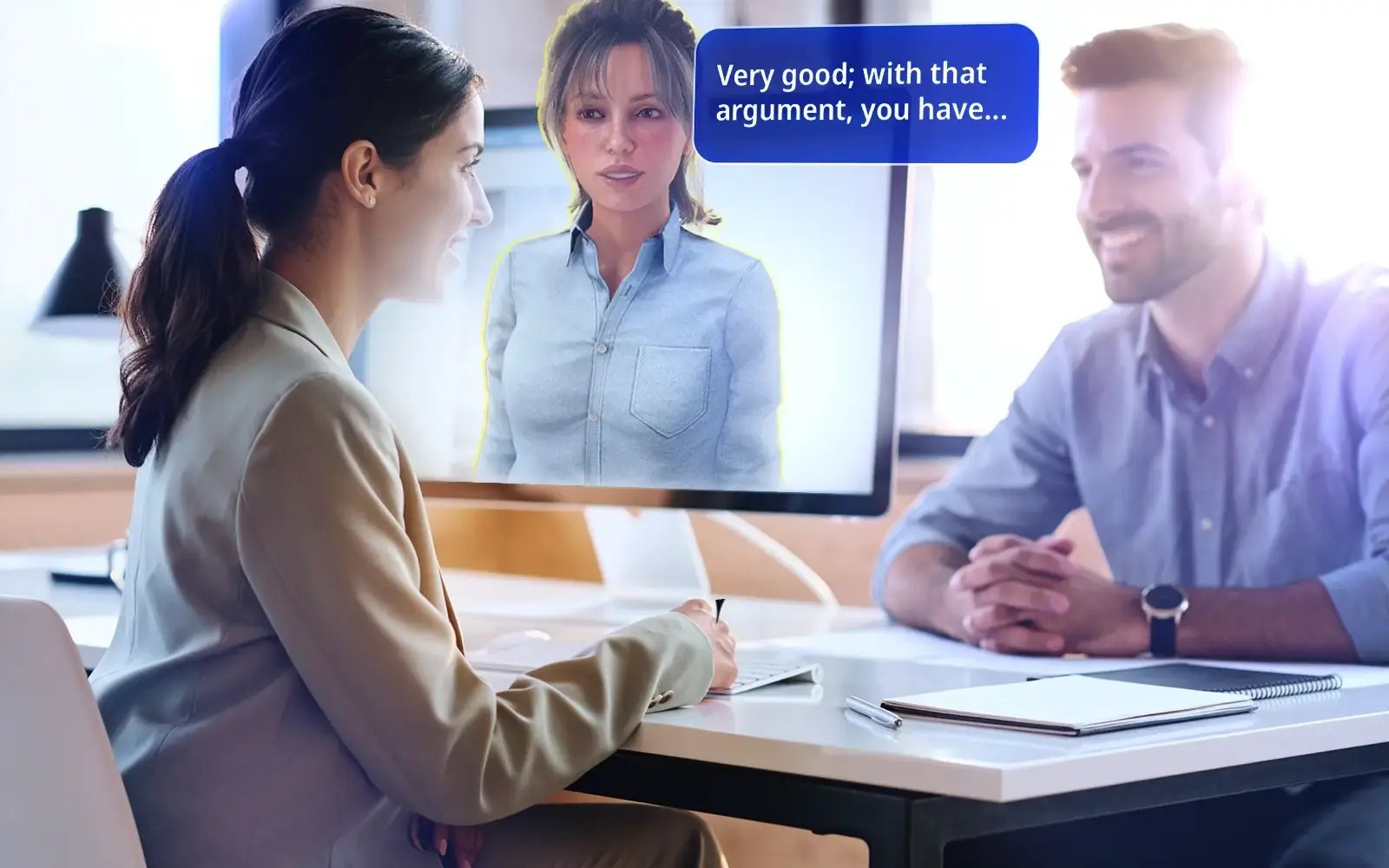
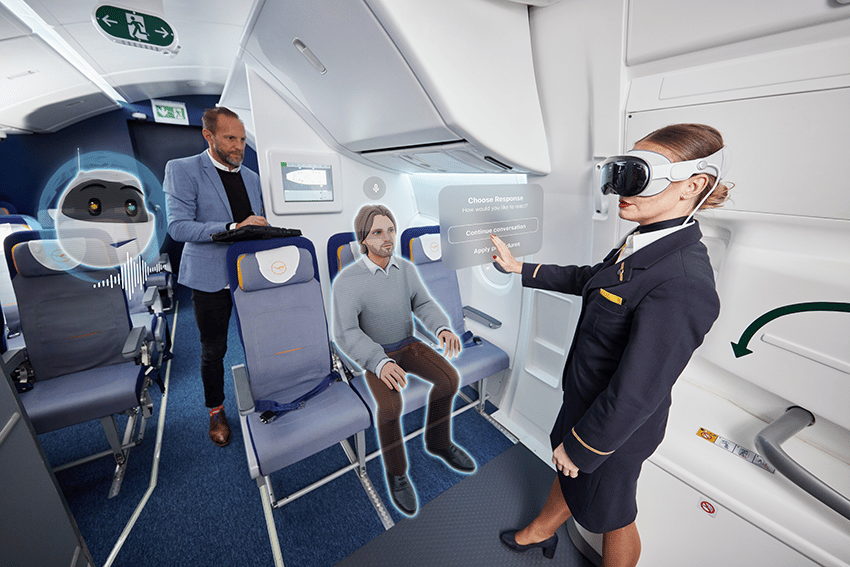
Modern, immersive soft skills training enables HR teams to offer employees realistic situations in which they can confidently practice behaviors. AI-driven simulations create a learning environment that is free of peer pressure yet still depicts authentic conversation situations. Practical training is provided in HR-related topics such as employee appraisals, feedback culture, conflict resolution, team communication, and leadership skills.
The AI analyzes language, reactions, and communication style and provides precise feedback that would otherwise only be possible with expensive coaches. This immediate, objective, and scalable coaching is a game-changer.
Measurability and Scalability for Modern HR Teams
HR needs training that not only inspires but also has a data-driven impact. Digital soft skills training offers exactly that. It allows learning progress to be made transparent, competence gaps to be identified early on, and training needs to be precisely managed. Companies can see how teams communicate, how managers develop, and where additional support is needed. At the same time, soft skills training can be rolled out to 1,000 or 10,000 people without additional effort, whether across locations, remotely, hybrid, or internationally. This scalability finally makes soft skills development plannable and efficient.
Soft skills as a Strategic Advantage for Culture, Leadership, and Performance
In a working world where hybrid teams, digital communication, and high pressure to change shape everyday life, employees need strong soft skills above all else to be successful. HR plays a key role in this: it is about promoting a culture in which people actively listen, lead with appreciation, communicate clearly, and deal with conflicts constructively. Soft skills training strengthens these abilities in the long term and makes a decisive contribution to making teams more resilient, managers more effective, and employees feel more confident in challenging situations. In this way, companies not only increase the personal development of their employees, but also productivity, collaboration, and overall success.