HeartElement 1

Free White Paper for L&D & Learning Professionals

VR Training for Hard Skills: From Pilot Project to Scalable Rollout

How can you digitize hands-on, technical, and safety-related training without having to program a custom VR application for every scenario? In our free white paper, you'll learn how companies create, update, and deploy VR and AR training across multiple locations, all without writing code.

3spin Learning Whitepaper

When Hands-On Training Reaches Its Limits

You can't teach every hard skill just with videos, slides, or traditional e-learning. Employees need to understand processes, make decisions, and get hands-on practice, sometimes on expensive machinery or in situations that are difficult, costly, or risky to replicate in everyday work. For L&D, this raises some key questions.

How do we train practical procedures without permanently reserving equipment for training?

How can employees safely train handling errors and critical situations?

How do we roll out a successful training program across multiple locations?

How do we update content when processes or machines change?

And how do we avoid having to rely on developers every time an adjustment is needed?

Which Hard Skill Trainings Are Well-Suited for VR?

VR training is particularly well-suited for practical learning content that requires employees to train in processes, decision-making, or manual procedures in a realistic manner, especially when real-world training is expensive, time-consuming, difficult to scale, or involves risks. Typical areas of application include, for example, workplace safety and hazardous situations, machine and equipment training, technical processes and maintenance, logistics and load securing, laboratory and hygiene training, production processes, error and malfunction scenarios, and work planning.
Why Many VR Pilot Projects Don't Scale

A successful VR prototype does not automatically translate into a scalable training program. For company-wide deployment, L&D teams must consider early on how content will be created, updated, managed, measured, and delivered across different locations and devices. Our white paper highlights this distinction. In initial innovation projects, the focus is on prototypes; only later do efficient content creation, IT-compliant management, and company-wide rollout become relevant.

Too Expensive to Further Develop

No process change should require the entire training program to be reprogrammed.

Too Dependent on Developers

L&D and expert staff should be able to create and customize content themselves.

Too Time-Consuming to Roll Out

Training programs should be managed centrally and made available across different locations.

How you can Scale VR Training Within your Company?

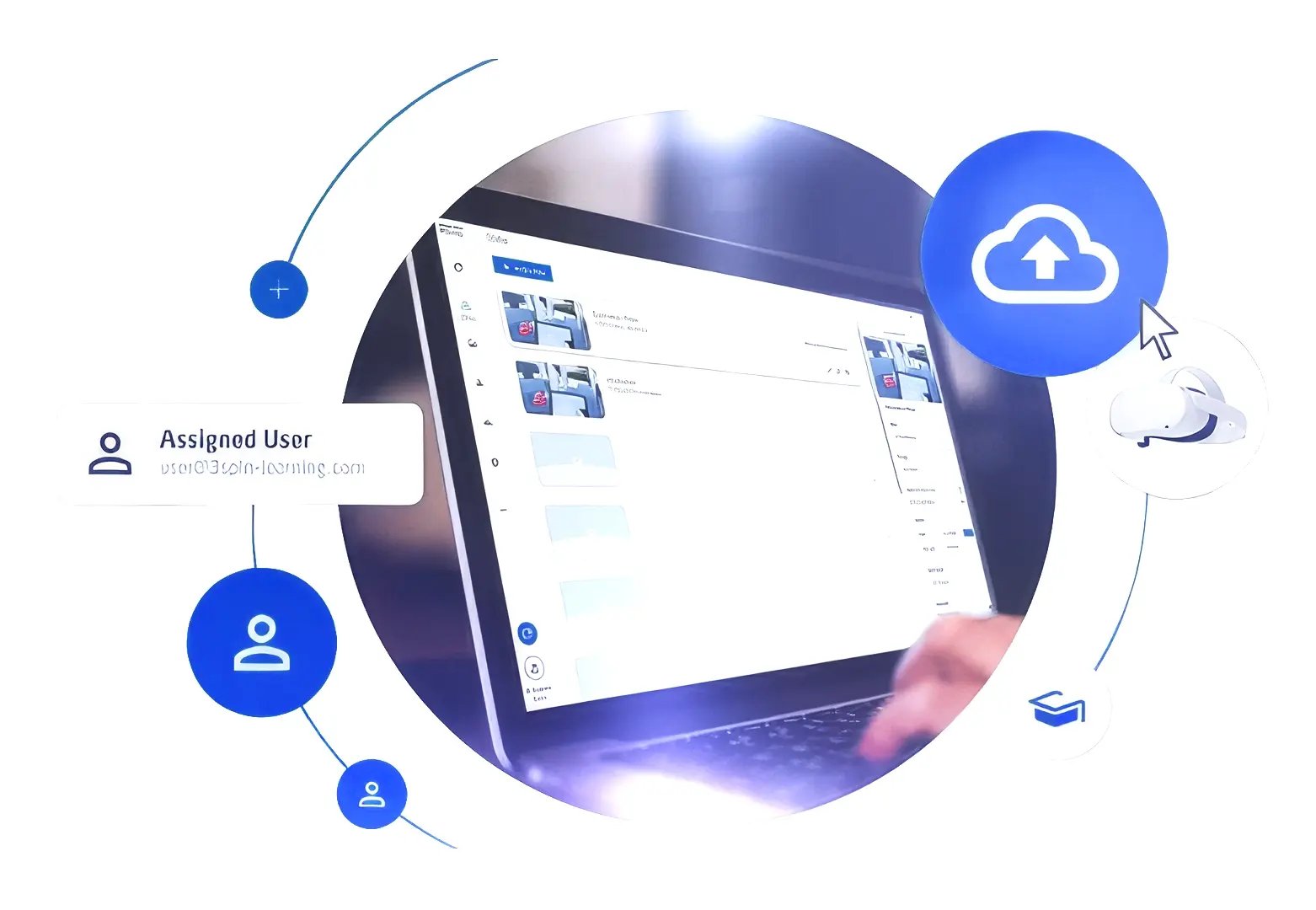
Scalable VR training requires more than just good VR content. You need a solid technical foundation for creating, updating, managing, deploying, and evaluating L&D training in one source.

3spin Learning VR Training

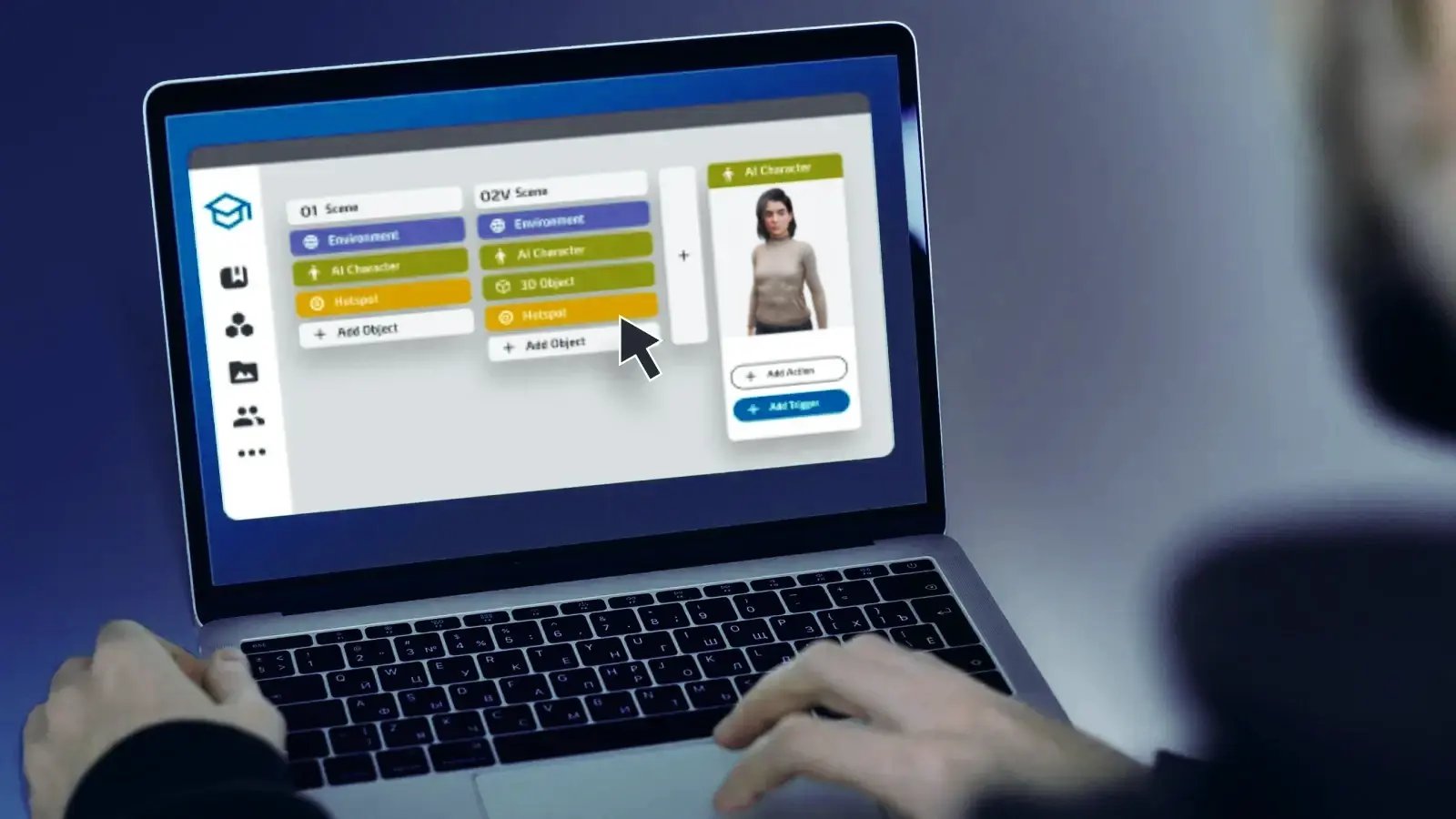
No-Code Authoring

L&D professionals and industry experts can create and edit content without any programming knowledge.

3spin Learning Training

Single-Source Content Management

Existing images, videos, 3D objects, and other assets can be reused.

3spin Learning

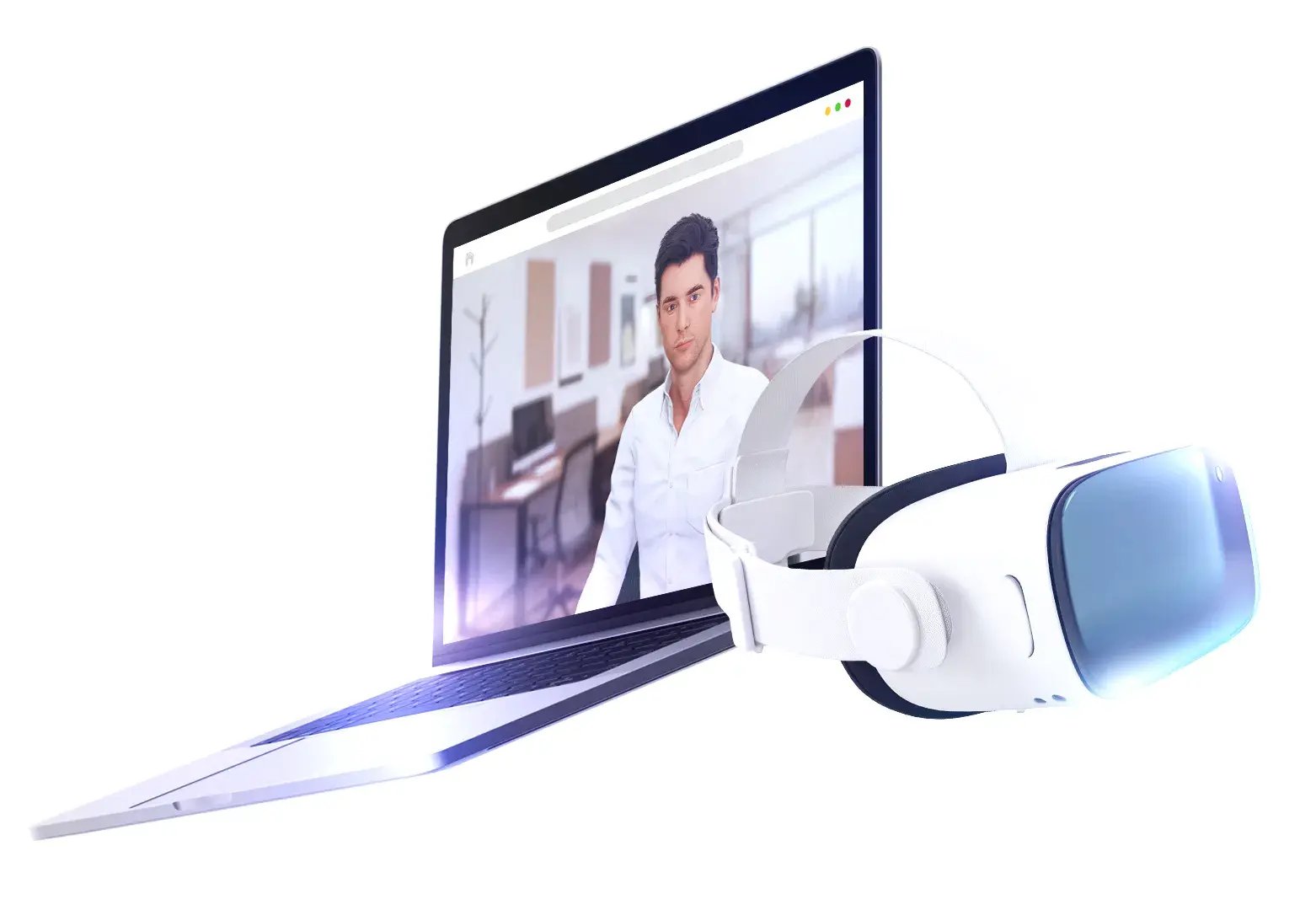
Flexible Deployment

Deliever training sessions on appropriate devices depending on the scenario.

3spin Learning

LMS Integration

Integrate learning activities and results with existing learning management systems.

3spin Learning AI Coaching

Roles and Permissions

Different levels of access for administrators, authors, and learners.

3spin Learning Skill Teaching

Reporting

Track learning objectives and training results.

What You’ll Learn in our Free White Paper

Where traditional VR projects reach their limits

Why costs, maintenance, scalability, and IT integration quickly become problems during rollout.

How to Create VR and AR Training Without Coding

How L&D professionals, experts, or existing agencies can create and customize immersive learning content without having to code themselves.

How to create immersive hard-skill training

From safety and process training to technical procedures and work situations that are difficult to simulate.

How you rollout a VR pilot in your enterprise

What technical and organizational requirements you need for cross-location use.

Instant PDF Delivery. No Advertising, No Obligation

What features a VR learning platform needs

From user management and reporting to LMS integration and multi-user training.

Use Case

How Lufthansa Cargo Reduced Its Exam Failure Rate by 80% Thanks to AR Training

FAQ

Frequently Asked Questions on VR Training

What's VR training?

VR training is a form of immersive learning in which employees can experie

For which hard skills is VR training suitable?

VR is particularly well-suited for technical, practical, and safety-related training where real-world exercises are expensive, difficult to scale, or feasible only to a limited extent. Examples include workplace safety, machine and process training, logistics, load securing, laboratory training, and technical failure scenarios.

How can a company implement VR training?

A good starting point is a clearly defined use case with a specific learning objective. However, even during the pilot project, companies should consider how content can later be updated, managed, evaluated, and rolled out to other locations.

Do you need programming skills to create VR training?

Not necessarily. No-code authoring tools enable L&D teams and subject matter experts to create and customize VR and AR learning content using visual editors. The white paper outlines an approach in which training courses can be created directly in the browser and existing media and 3D objects can be integrated.

How can we scale VR training globally?

For a company-wide rollout, key requirements include centralized content management, flexible delivery, easy updates, and integration into existing learning and IT infrastructure.

Can we integrate VR training with an LMS?

Yes. Learning platform such as 3spin Learning can be integrate with learning management systems such as Workday, Cornerstone, Docebo, or SAP SuccessFactors.

What are the benefits of VR for safety training?

VR can simulate situations that are difficult, expensive, or high-risk to train for in real life. Employees can practice procedures repeatedly without having to set up real-world facilities or hazardous situations for every training session.

How does a VR pilot become a scalable training program?

Even during the pilot project, companies should consider not only the learning content but also authoring, updates, device management, IT integration, reporting, and rollout. A shared platform can help meet these requirements centrally.

eLearning-2024-1
Brandon Hall-großweb
2023 Watchlist Web Large_experiential learning technologies
brandon_hall
edtechAward-CT-fin2023
Award-delina-2022-logo-1
eLearningAward
Award-LearNext-2019-1
Award-learningjournal-2019-logo

Start Testing Immersive Training  With AI Now

Just test our range in your browser without VR glasses.