HeartElement 1

Free White Paper for HR, Leadership & L&D

Turning Training into Real-World Skills

How can you tell whether your soft skills training is actually effective? Using feedback conversations as an example, we show you how to foster learning transfer, better assess training impact, and use AI to support real-world skills development.

3spin Learning Whitepaper

Training Completion Isn't Skill

Participation rates, completion rates, and feedback surveys are easy to measure. What's much harder to determine is whether employees can actually apply what they have learned in their day-to-day work. With soft skills in particular, there is often a gap between knowledge and behavior. Managers may know the principles of effective feedback and still feel unsure during a difficult employee conversation. Our whitepaper shows how HR needs to address this transfer gap more.

Longterm Skills

Knowing the methods does not mean being able to apply them confidently in challenging situations.

Hard-to-track Soft Skills

Traditional learning KPIs mainly show activity. Whether behavior actually changes is much harder to assess.

How to Scale

Role-plays and individual coaching provide valuable opportunities to practice, but they require trainers, scheduling, and time.

What you can Expect from our White Paper

Why Soft Skills Training Falls Short When It Comes to Learning Transfer

Why knowledge alone doesn't lead to behavioral change and where the gap between learning, and doing emerges.

How to Track Soft Skills

Which dimensions HR can consider to assess skills development beyond completion rates.

How AI Supports Hands-on Skills Development

Using performance feedback as an example, see how simulations, personalized feedback, and repetition work together.

Most important KPIs for HR and L&D

How learning, transfer, people, and business KPIs diffe, and when to use which metrics.

Checklist for Your L&D Strategy

Apply these insights to your own people and leadership development strategy.

Based on real-world experience. Scientifically sound. Ready to implement.

How can you Track Soft Skills?

You can't track soft skills with one single metric alone. For HR and L&D, it's more useful to look at different levels of training impact such as transfer into everyday work and potential effects on people or business KPIs. What matters most is whether behavior actually changes after the training. Discover which KPIs are suitable for each level and how HR can connect them in our whitepaper.

1. Learning

Did employees develop relevant knowledge, methods, and skills?

2. Application

Can employees apply their knowledge in real-life situations?

3. Transfer

Do they aplly the desired behavior in everyday work?

4. Impact

What changes in people, culture, or business KPIs are there?

How AI Supports Learning Transfer for Soft Skills

AI-powered role-plays bridge the gap between theoretical learning and hands-on application. Instead of just talking about challenging conversations, employees experience realistic scenarios with AI-powered conversation partners. They have to respond, make decisions, and put what they have learned into practice. This turns one-time learning into a continuous cycle of application, feedback, and repetition.

Soft Skills Training with AI Coaching for HR Managers

Experience Real-life Scenarios

Employees apply methods in dynamic conversation scenarios instead of simply learning about them in theory.
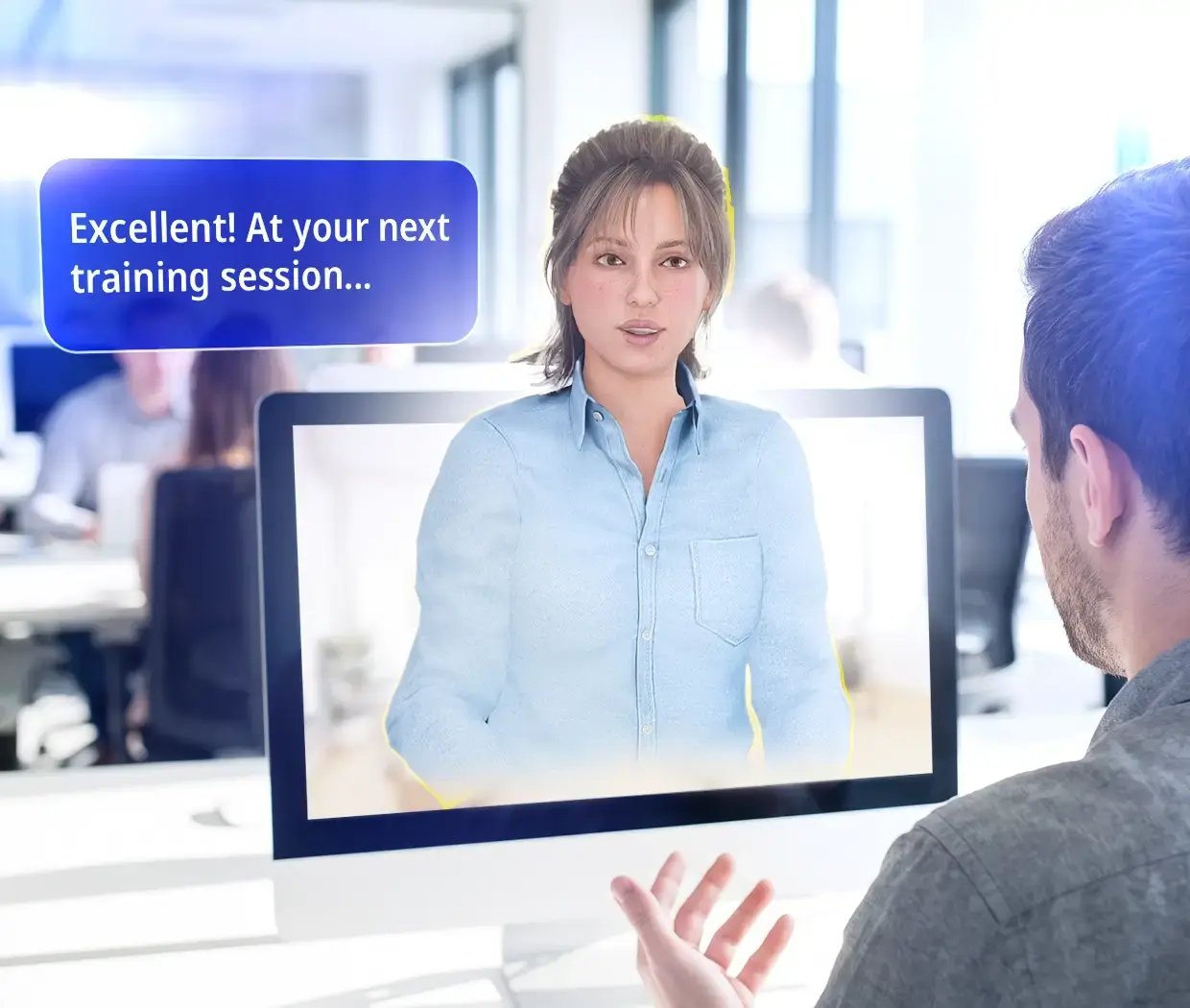
Soft Skills Training with AI Coaching in Customer Service and Support

Receive Instant Feedback

After the simulation, learners receive feedback and reflect on what already works well and where there is room for improvement.
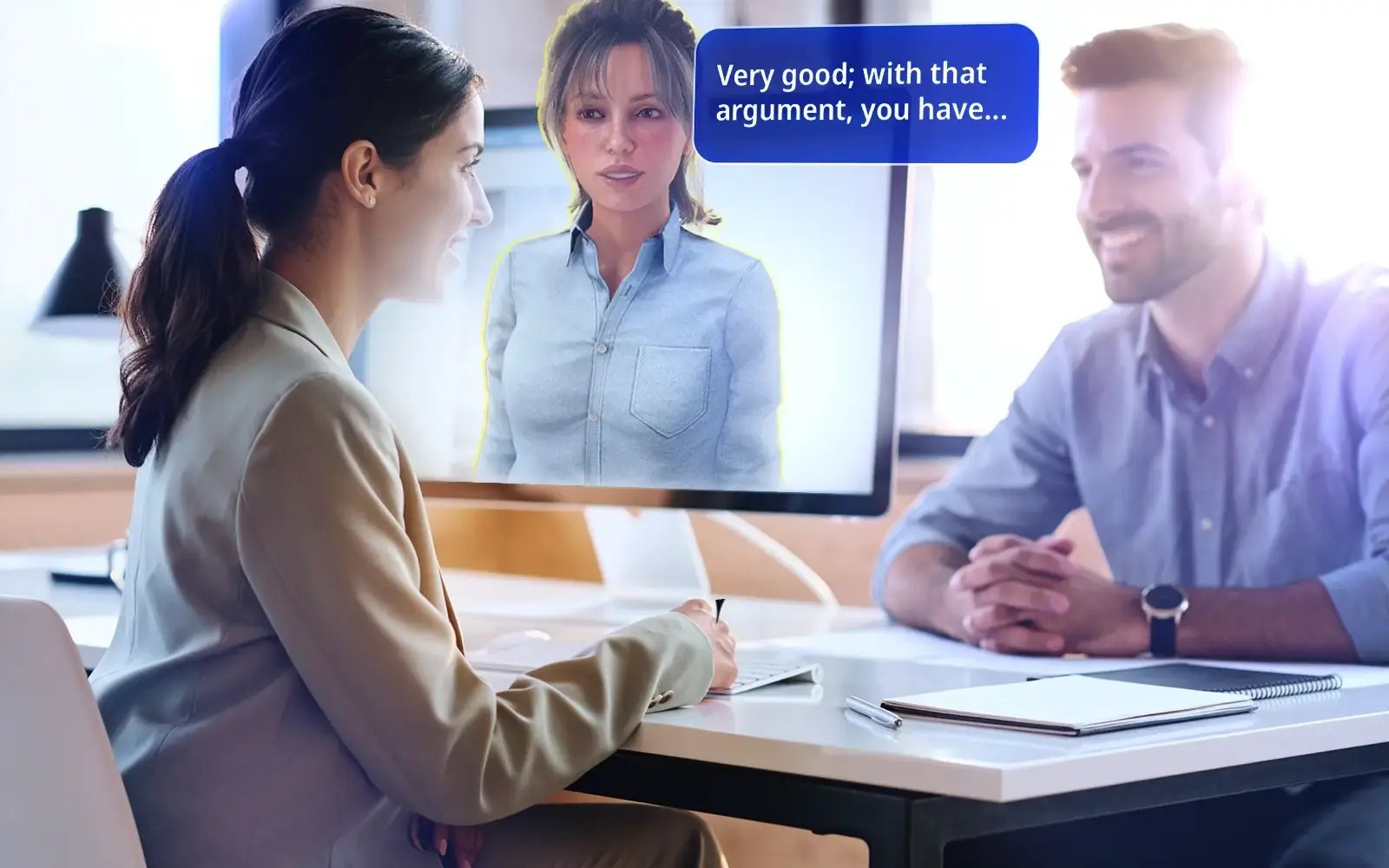
Soft Skills Training with AI Coaching in Sales

Try Different Behaviors

Repeat learning scenarios as often as you need, allowing learners to immediately apply the feedback and try different approaches.

AI Role-play with avatars

Scale Hands-on Training

AI simulations enable repeated practice without the need to arrange a coach or role-play partner for every individual training scenario.

3spin Learning AI Role-play learning scenario

Practice, Not Just Theory

Learners have to actually apply the skills they are developing.

3spin Learning AI-Based Soft Skills Training

Transfer to Everyday Work

Training should take place as close as possible to the real-world situations in which the skill will later be needed.


KPIs for Great Soft Skills Training

You can asses digital learning at different levels. Which KPIs are most useful always depends on the goals of the training. In this whitepaper, you’ll learn how to select relevant metrics and combine them to take an impact-oriented approach to skills development.

Learning KPIs

Show whether employees participate in the training, engage with the content, and achieve the learning objectives.

Transfer KPIs

Show whether employees apply what they have learned and transfer new behaviors into their everyday work.

People KPIs

Can reveal changes in areas such as engagement, collaboration, or employee retention.

Business KPIs

Depending on the training objectives, operational metrics such as productivity may also be relevant.

Who is This White Paper Ideal For?

HR & People Development

If you want to develop soft skills systematically and make the impact of your initiatives more visible.

Learning & Development

If completion rates are not enough and you want to put greater emphasis on learning transfer in your training strategy.

Leadership Development

If you want to equip leaders with proven methods and prepare them for real-world, challenging conversations.

People & Culture

If you want to establish a shared feedback and learning culture and embed it in everyday work.

logo_boehringer
logo_pfizer
logo_lufthansa
logo_e-on
logo_tuev-nord
logo_basf
logo_deutsche-bahn
logo_bayer_gray

Frequently Asked Questions About Soft Skills, Learning Transfer, and Training Impact

How can you measure Soft Skills?

Soft skills cannot be meaningfully measured using a single metric. Instead, companies can look at different levels, such as learning, practical application, behavior in everyday work, and relevant people or business KPIs. Which metrics are most useful depends on the specific skill and the training objective.

How Can HR Measure Employee Training Success?

HR can evaluate training initiatives at multiple levels from participation and learning progress to the application of what has been learned, behavioral change, and relevant business metrics. This provides a more nuanced picture than completion rates or satisfaction surveys alone.

What Is Learning Transfer?

Learning transfer refers to the application of knowledge, skills, or behaviors acquired in a learning environment to actual day-to-day work. With soft skills, successful learning transfer can be seen, for example, when an employee applies a communication method they have learned in a real and challenging situation.

Why Is Learning Transfer Particularly Important for Soft Skills?

Soft skills are demonstrated through behavior. Knowing a communication method in theory does not necessarily mean being able to apply it confidently under time pressure, during conflicts, or in emotionally challenging situations. Practical training helps bridge the gap between knowledge and behavior.

Which KPIs shouwl we Track for Soft Skills Training?

The right KPIs depend on the training objective. In addition to traditional learning KPIs, transfer metrics as well as people and business KPIs can be relevant. The key is to define before the training which behaviors or outcomes are expected to change.

What's the Difference Between Learning Success and Learning Transfer?

Learning success describes whether knowledge or skills have been developed during training. Learning transfer goes one step further and looks at whether employees actually apply what they have learned in their day-to-day work.

How Can AI Improve Learning Transfer?

AI-powered simulations can enable employees to apply learned behaviors in realistic situations, receive immediate feedback, and then practice the scenario again. This integrates practical application more deeply into the learning process.

How Can we Track Leadership Skills?

Leadership skills can be assessed based on clearly defined target behaviors and multiple levels of impact. Instead of simply tracking training participation, HR can examine whether desired behaviors are being applied and whether relevant people or business KPIs are changing.

Why Are Feedback Conversations a Good Example of Soft Skills Training?

Performance feedback combines several hard-to-measure skills, such as clarity, active listening, empathy, and the ability to handle difficult reactions. This makes them a particularly useful example of why theoretical knowledge alone does not translate into confident real-world performance.

Would You Like One Of Our Experts To Guide You Through Our Immersive Learning Courses?

We 'd be happy to show you all the features in a free demo.

